Message Us
 Call Us
 How Is Fault Determined in Bicycle Accidents?
By Anderson, Cummings & Drawhorn, LLP on June 26, 2017
By Anderson, Cummings & Drawhorn, LLP on June 26, 2017
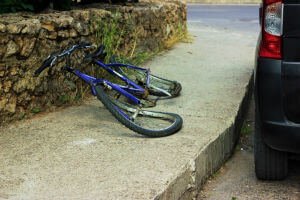
If you were injured in a bicycle accident, you might be able to file a lawsuit to obtain compensation from the driver. However, you must establish that the driver is at fault for the crash, which can be complicated.
Table of Contents
The Fort Worth bicycle accident attorneys of Anderson, Cummings & Drawhorn, LLP have in-depth knowledge of how fault is determined in these cases. Below, our attorneys explain what you need to know about determining fault for a bicycle crash.
In many bicycle accidents, the at-fault party is the one that violated one or more traffic laws.
In many cases, the laws that were violated govern the right of way at intersections and in other situations. When a car or bicycle has the right of way, others sharing the road are required to yield.
Typically, the right of way rules for drivers and bicyclists are the same. The Texas Transportation Code says bicyclists have the same duties as drivers unless stated otherwise, this includes obeying traffic lights and road signs.
There are also bicycle crashes caused by the failure of drivers to properly share the road with bicyclists. Sharing the road means that drivers must make room for bicyclists, provided riders are obeying traffic laws that apply to them riding in the street.
Section 551.103 of the Texas Transportation Code states that bicyclists who are traveling slower than other traffic on the roadway are required to ride as close to the edge of the roadway or curb as possible, with few exceptions, including if:
Here are some common examples of bicycle accidents, along with explanations for how fault would be determined:
There are some intersections where one lane of traffic does not have a stop sign while another lane does. Crashes often occur when bicyclists pull out in front of cars that have the right of way or when cars do not stop for bicyclists that have the right of way.
In these situations, fault is determined by who violated the right of way. If the bicyclist had a stop sign, he or she was required to stop and yield to any approaching cars that did not have stop signs.
If the bicyclist had no stop sign and the car did, the driver would be at fault for not yielding to the bicyclist.
In these situations, crashes often occur when bicycles attempt to cross an intersection or make a turn.
Under the law, the vehicle that arrives first has the right of way, whether it is a car or bicycle. If two vehicles arrive at the same time, the vehicle to the right has the right of way. If the intersection connects a major street to a minor street, traffic on the major street usually has the right of way.
Some bicycle accidents occur when cars hit riders who are traveling on the roadside.
Section 551.103 explains that riders must travel as close to the side of the road as possible. However, there are exceptions, such as when riders are making left turns or passing vehicles or other objects or hazards.
Fault will be determined based on whether the rider had the right to be there. If the rider had a right to be there, the driver will likely be at fault. If the rider should not have been there, he or she could be at fault.
Bicycle accidents can cause a variety of severe injuries that could affect your health for a long time, creating expensive medical bills.
An injury lawyer in Fort Worth from Anderson, Cummings & Drawhorn, LLP may be able to file a lawsuit to obtain compensation for medical bills, lost wages and other damages experienced by crash victims.
We are experienced in establishing fault in bike accident cases and are prepared to conduct a thorough investigation to collect evidence in support of your claim.
Schedule a free, no-obligation consultation with our legal team today. You will be under no obligation to continue pursuing a lawsuit with our firm. Should you decide to, we work on contingency, meaning you will only owe legal fees if we are able to recover compensation for you.
Contact our firm today to find out how we can help you.

This page has been written, edited, and reviewed by a team of legal writers following our comprehensive guidelines. This page was approved by attorney Seth Anderson, whose team has more than 50 years of combined legal experience in helping victims of personal injury seek justice.

After a Fort Worth oilfield accident, you may be able to sue the contractor, the operator, or another company. Still, liability depends on who controlled the work, who created the dangerous condition, and whose conduct caused your injury. At Anderson, Cummings & Drawhorn, we know how complex oilfield accidents can...
Read Article
Grocery store slip and fall accidents are more serious than people think because they can cause serious injuries that may seem negligible at first. A sudden fall onto a hard floor can damage your head, spine, hips, joints, and other parts of your body, even when the fall initially looks...
Read Article
Multi-vehicle highway accidents in Fort Worth can cause serious injuries such as traumatic brain injuries, broken bones, spinal injuries, internal injuries, and severe soft tissue damage. You can be struck more than once as vehicles collide, increasing the force placed on the body. These crashes can occur on major highways...
Read ArticleTell us about your accident and your injuries. An injury lawyer from our team will call and provide you with a free evaluation of your case. If we can help, and you are unable to travel, we will come to your home, office, or hospital. It’s easy – let’s get started.

Email us anytime and we will get back to you.

Our attorneys will come to your home, office or hospital at your convenience.

Our team is ready and waiting to help you today.