Message Us
 Call Us
 What Can a Pedestrian Do If There Is No Sidewalk? Safety and Legal Rights Explained
By Anderson, Cummings & Drawhorn, LLP on April 28, 2026
By Anderson, Cummings & Drawhorn, LLP on April 28, 2026
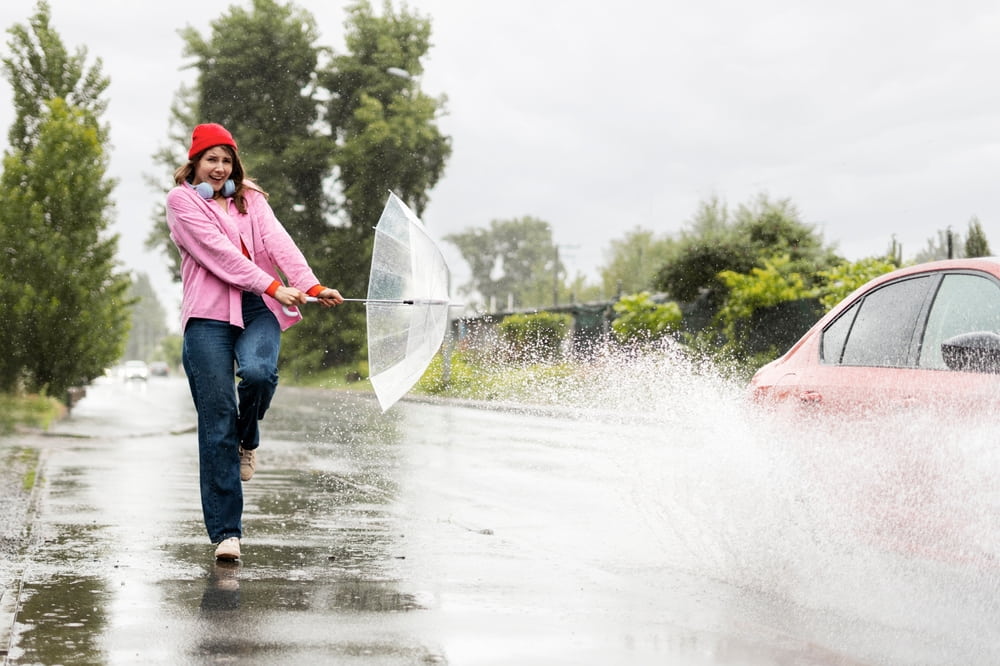
Walking along Dallas roadways without pedestrian space raises immediate safety concerns and legal questions. Understanding what can a pedestrian do if there is no sidewalk becomes essential when daily routines involve walking along road edges or shoulders. At Anderson, Cummings & Drawhorn, LLP, our Dallas pedestrian accident lawyers work with individuals facing these risks and analyze how Texas statutes and driver conduct influence pedestrian accident claims across the city.
Table of Contents
Texas law directly addresses pedestrian movement when sidewalks are missing. Under Texas Transportation Code Section 552.006, a pedestrian cannot walk along a roadway when a sidewalk remains accessible. When no sidewalk exists, the law requires walking on the left side of the roadway or shoulder, facing oncoming traffic, unless conditions make that side unsafe.
This rule supports visibility and reaction time. Facing traffic allows a pedestrian to anticipate approaching vehicles and adjust position when needed. Dallas courts often consider compliance with this statute when evaluating fault in pedestrian accident claims.
No Fees Unless We Win
Dallas road conditions vary widely, and pedestrian movement often depends on the surrounding environment. In residential neighborhoods, pedestrians typically walk along the outer edge of the roadway where traffic moves slower. On wider roads, shoulders provide a safer buffer when available, allowing more distance from passing vehicles.
Conditions change in construction zones, suburban developments, and high-speed corridors where sidewalks remain incomplete or absent. Narrow lanes, limited lighting, and faster traffic increase exposure. Understanding what can a pedestrian do if there is no sidewalk in these settings helps reduce risk and supports safer decision-making.
Legal compliance forms only part of pedestrian safety. Practical habits help reduce injury risk when sharing the road. Walking while facing traffic improves awareness. Staying as far from active lanes as possible creates distance from passing vehicles.
Visibility also plays a major role. Wearing bright or reflective clothing helps drivers notice pedestrians earlier, especially in low-light conditions. Walking in single file instead of side-by-side limits exposure. Remaining alert matters as well. Phones, headphones, and other distractions reduce awareness of nearby traffic.
Even without sidewalks, drivers still carry legal duties. Texas law requires motorists to exercise due care to avoid collisions with pedestrians. This obligation applies regardless of pedestrian location on the roadway.
Drivers must remain attentive, adjust speed, and take reasonable steps to prevent harm. Failure to yield, distracted driving, and speeding frequently contribute to pedestrian collisions. In many Dallas cases, driver negligence outweighs pedestrian conduct, especially when a driver ignores visible hazards.
Understanding driver responsibilities helps clarify legal rights after a crash. Pedestrians retain protection under Texas law even when walking along a roadway without a sidewalk.
Pedestrian accidents in Texas remain a serious concern, particularly in areas lacking proper infrastructure. According to the Texas Department of Transportation, 6,095 pedestrian crashes occurred in 2024, resulting in 772 deaths and 1,455 serious injuries. Leading causes include failure to yield, driver inattention, and speeding.
Common accident scenarios include vehicles drifting onto shoulders, drivers failing to see pedestrians at night, and collisions during turns near unmarked crossings. Distracted driving continues to play a major role across Dallas.
Many cases arise from situations involving what can a pedestrian do if there is no sidewalk , especially after preventable roadway incidents
Don’t face big insurance companies alone. Our award-winning lawyers have recovered over $100 million for clients just like you. We’re ready to put our 50+ years of combined experience to work, fighting for the compensation you deserve.
Liability in pedestrian accidents depends on how each party contributed to the incident. Texas follows a proportionate responsibility system. Under Texas Civil Practice and Remedies Code Section 33.001, an injured person may recover damages only when responsibility remains 50 percent or less.
A pedestrian who follows roadway rules, walks facing traffic, and stays visible may still recover compensation even when partially at fault. Drivers who speed, ignore surroundings, or fail to yield often carry significant responsibility.
Other parties may also share liability. Property owners, contractors, or municipalities may face scrutiny when unsafe road conditions contribute to pedestrian access issues. Each claim requires careful review of evidence, including reports, witness accounts, and roadway conditions.
Pedestrian injuries along Dallas roads without sidewalks often involve complex liability questions and serious consequences. Our team at Anderson, Cummings & Drawhorn, LLP reviews each claim with attention to Texas law, roadway conditions, and driver conduct. Call us at 817-920-9000 to discuss your situation, or request a free case evaluation to explore how a pedestrian accident claim may move forward.
As a Fort Worth native and a double-Board Certified trial lawyer, John Cummings is dedicated to fighting for the rights of the injured. With a track record that includes record-setting verdicts and multi-million dollar settlements, he is an aggressive advocate who isn’t afraid to take on tough cases.


This page has been written, edited, and reviewed by a team of legal writers following our comprehensive guidelines. This page was approved by attorney Seth Anderson, whose team has more than 50 years of combined legal experience in helping victims of personal injury seek justice.
Older adults face higher risks after slip and fall accidents because aging bones, slower reflexes, and existing conditions turn a routine fall into a fracture and hospitalization. An impact a younger person shrugs off can start a downward spiral, which is what makes these slip and fall accidents so consequential....
Read Article
Delaying medical treatment after an accident gives insurers an opportunity to argue that your injuries were minor or caused by something else. Because Texas juries place significant weight on medical records, gaps in treatment can weaken an otherwise strong personal injury claim. What Does an Insurer Do With a Gap...
Read Article
Lack of safety gear leads to catastrophic ATV injuries because an all-terrain vehicle offers no cab, no restraint, and no crumple zone, so the rider’s body absorbs the entire crash. Helmets, eye protection, boots, and padding are the only barriers between a rollover and permanent personal injuries. What Does Protective...
Read ArticleTell us about your accident and your injuries. An injury lawyer from our team will call and provide you with a free evaluation of your case. If we can help, and you are unable to travel, we will come to your home, office, or hospital. It’s easy – let’s get started.

Email us anytime and we will get back to you.

Our attorneys will come to your home, office or hospital at your convenience.

Our team is ready and waiting to help you today.
 Call Us At (817) 920-9000
 Call Us At (817) 920-9000