Message Us
 Call Us
 Who is Liable for an Accident Caused by a Medical Emergency?
By Anderson, Cummings & Drawhorn, LLP on February 23, 2021
By Anderson, Cummings & Drawhorn, LLP on February 23, 2021
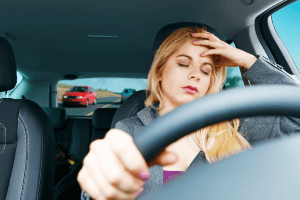
After an accident, the at-fault driver may deny fault and even try to pin the blame on another driver or some other factor. What happens when the at-fault driver claims he or she had a sudden medical emergency and that is what caused the crash?
Table of Contents
Below, the Fort Worth car accident attorneys discuss what this could mean for your claim, including how an at-fault driver may be able to use the sudden medical emergency defense.
A sudden medical emergency occurs when someone experiences a medical episode that he or she could not have predicted would happen.
For example, if a driver experiences a heart attack or stroke, it could be considered a sudden medical emergency if he or she did not feel any of the symptoms before it happened.
However, even if the driver did not experience any symptoms, he or she may still be liable for damages. If a doctor recommended this person refrain from driving due to a medical condition and that person failed to follow the doctor’s orders, he or she could still be liable.
As in most states, Texas has a sudden emergency defense law that drivers may invoke after an accident that would waive virtually all liability for an accident. It is known as the “Unavoidable Accident Defense” or “Act of God Defense.”
A person may have a medical emergency on the road, but to invoke that as a defense to deny liability after an accident, it must be an unforeseen event in which he or she loses consciousness while driving and is unable to control the vehicle.
Generally, after an accident, the person who was injured needs to provide a preponderance of evidence to prove that another person’s negligence caused the accident.
However, when the person accused of negligence invokes the unavoidable accident defense to deny liability, the burden of proof shifts to that person and the party that represents him or her.
The burden of proof means that the person who is claiming to have experienced a medical emergency must now prove that there was no way of knowing about it beforehand.
Evidence to back up this claim includes medical records or witness testimony if anyone else was in the vehicle with the person at the time of the crash. On the other hand, proving the medical emergency was foreseeable is another way to help build the case against the other driver.
For example, in a 1990 Texas appellate case titled Harvey v. Culpepper, a defendant who tried to deny liability for an accident after suffering a hypoglycemic episode failed to prove the episode was sudden because the driver felt an onset of illness prior to getting behind the wheel. In this case, the driver also had a documented history of being a diabetic and doctors recommended this person strictly regulate his blood sugar levels.
If the driver attempting to invoke the sudden emergency defense suffered symptoms prior to the accident or was known to suffer from a pre-existing condition and doctors advised this person against driving, that person may be held liable for your injuries.
However, there may be some circumstances in which the person’s medical episode may have been avoided, yet liability does not fall to that person. One such circumstance could be if a doctor inaccurately diagnosed a patient and improperly cleared them to operate a motor vehicle. The liability for the accident could potentially fall to the doctor, but it would be best to discuss this type of rare situation with a licensed attorney who can analyze the facts of your case and see what your legal options may be.
If the driver who caused your crash claims he or she had an unforeseeable medical emergency, you should discuss the claim with an attorney at Anderson, Cummings & Drawhorn, LLP to see how we may be able to help you.
Let us review your claim in a free consultation to see what your legal options may be. We charge you nothing up front or while we work on your claim, so there is no risk to you.
Call today for a free consultation (817) 920-9000.

This page has been written, edited, and reviewed by a team of legal writers following our comprehensive guidelines. This page was approved by attorney Seth Anderson, whose team has more than 50 years of combined legal experience in helping victims of personal injury seek justice.

After a Fort Worth oilfield accident, you may be able to sue the contractor, the operator, or another company. Still, liability depends on who controlled the work, who created the dangerous condition, and whose conduct caused your injury. At Anderson, Cummings & Drawhorn, we know how complex oilfield accidents can...
Read Article
Grocery store slip and fall accidents are more serious than people think because they can cause serious injuries that may seem negligible at first. A sudden fall onto a hard floor can damage your head, spine, hips, joints, and other parts of your body, even when the fall initially looks...
Read Article
Multi-vehicle highway accidents in Fort Worth can cause serious injuries such as traumatic brain injuries, broken bones, spinal injuries, internal injuries, and severe soft tissue damage. You can be struck more than once as vehicles collide, increasing the force placed on the body. These crashes can occur on major highways...
Read ArticleTell us about your accident and your injuries. An injury lawyer from our team will call and provide you with a free evaluation of your case. If we can help, and you are unable to travel, we will come to your home, office, or hospital. It’s easy – let’s get started.

Email us anytime and we will get back to you.

Our attorneys will come to your home, office or hospital at your convenience.

Our team is ready and waiting to help you today.