Message Us
 Call Us
 Who Is Responsible for Road Debris Damage? Understanding Liability After an Accident
By Anderson, Cummings & Drawhorn, LLP on March 25, 2026
By Anderson, Cummings & Drawhorn, LLP on March 25, 2026
Commercial trucks travel through Arlington daily on I-20, Highway 360, and Interstate 30, moving freight across North Texas at all hours. When cargo, tire fragments, or construction materials land in a traffic lane, damage and multi-vehicle collisions can follow in seconds. Drivers often question who is responsible for road debris damage after impact. At Anderson, Cummings & Drawhorn, LLP, we evaluate Texas truck accident claims and pursue accountability when negligence places hazardous materials on the roadway.
Table of Contents
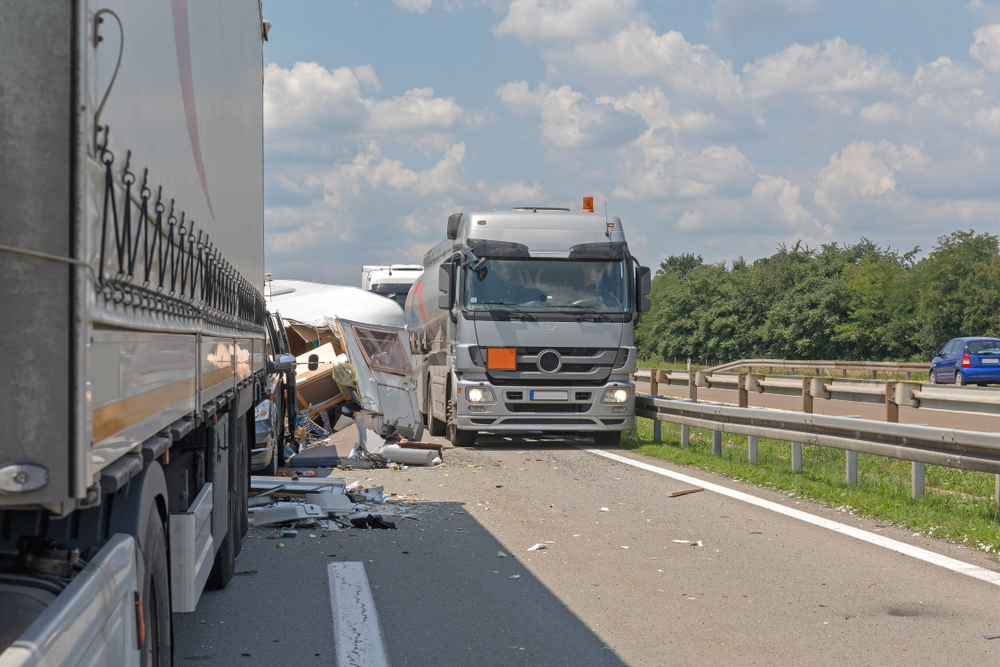
Road debris refers to objects or materials left on a roadway that create danger for motorists. Examples include fallen cargo, tire fragments, construction materials, furniture, or equipment dropped from trucks or trailers. Debris may strike a vehicle or force a driver to take evasive action, leading to a secondary collision.
According to the AAA Foundation for Traffic Safety, crash databases typically group debris incidents under broader “non-fixed object” categories rather than labeling them separately. In Arlington, police reports often document the object involved and whether cargo came from another vehicle, which can influence liability analysis in truck accident claims.
Unsecured cargo ranks among the most frequent sources of roadway hazards in North Texas. Dump trucks, flatbeds, and contractor vehicles often carry gravel, scrap metal, lumber, or machinery. When tie downs loosen or trailer doors fail, materials scatter across traffic lanes.
Texas law imposes a direct duty on vehicles transporting loose materials. Section 725.021 of the Texas Transportation Code requires vehicles to prevent loose material from escaping by blowing or spilling and prohibits vehicle beds with openings through which materials can escape. A violation strengthens a negligence claim when debris falls from a commercial vehicle.
Other contributing factors include overloaded trailers, worn tire treads separating at highway speeds, and construction zone failures allowing materials onto travel lanes. Driver conduct also matters. Speeding limits reaction time. Distraction prevents early hazard recognition. Poor vehicle maintenance increases the likelihood of secondary crashes.
No Fees Unless We Win
Responsibility often falls on the party who created the hazard or failed to address a known danger. In truck accident cases, this may include the driver who transported unsecured cargo and the trucking company overseeing loading and safety procedures. Construction contractors can also bear responsibility when materials enter traffic. Claims against government entities face strict Texas notice requirements and statutory limits.
Under Texas comparative fault rules, compensation may decrease if a driver had a reasonable opportunity to avoid the debris. Proving who is responsible for road debris damage requires evidence linking the object to a specific source.
Truck accident litigation demands careful review of loading practices, inspection records, and company policies. Commercial carriers must train drivers to inspect cargo before departure and during transit. Failure to follow cargo securement requirements exposes both the driver and employer to liability.
A dump truck releasing gravel creates a foreseeable risk of windshield damage and multi-vehicle crashes. A flatbed losing steel pipes presents far greater danger. Investigations often focus on bills of lading, pre-trip inspection logs, maintenance records, dash camera footage, and eyewitness statements.
Clear documentation connecting the cargo to a specific truck strengthens a negligence claim and supports recovery for property damage, medical expenses, and lost income.
Insurance carriers frequently treat debris crashes as comprehensive claims when no at-fault party can be identified. Comprehensive coverage may pay for vehicle repairs after contact with roadway objects. When evidence shows another driver or trucking company caused the hazard, a liability claim should proceed through the responsible insurer.
Adjusters evaluate whether the collision involved avoidable circumstances. A driver who encounters debris without warning may avoid fault. A motorist who had time to slow or change lanes yet failed to act reasonably may face partial responsibility. In truck accident cases involving multiple parties, identifying who is responsible for road debris damage significantly affects settlement negotiations.
No Fees Unless We Win
Strong evidence supports successful debris claims. Photographs of the object, damage patterns, skid marks, and surrounding vehicles help reconstruct events. Dash camera recordings can capture cargo falling from a truck. Witness statements may identify the vehicle involved.
Police reports sometimes include license plate numbers or company information. Maintenance records reveal whether inspection requirements were met. Loading documentation shows who secured the cargo. Prompt investigation preserves evidence before debris gets cleared from Arlington roadways.
Road debris collisions tied to commercial vehicles require detailed review of Texas transportation law and comparative fault rules. A focused legal approach can shift how insurers assess liability and damages. Call or team of truck accident lawyers in Dallas at Anderson, Cummings & Drawhorn, LLP at 817-920-9000 to discuss available options for pursuing compensation.
As a Fort Worth native and a double-Board Certified trial lawyer, John Cummings is dedicated to fighting for the rights of the injured. With a track record that includes record-setting verdicts and multi-million dollar settlements, he is an aggressive advocate who isn’t afraid to take on tough cases.


This page has been written, edited, and reviewed by a team of legal writers following our comprehensive guidelines. This page was approved by attorney Seth Anderson, whose team has more than 50 years of combined legal experience in helping victims of personal injury seek justice.

Slip-and-Fall accidents in Fort Worth businesses are not only common but also often surprisingly serious. Fort Worth is growing rapidly in terms of both population and economic growth, and some businesses cut safety corners in their rush to keep up. If you’ve been injured in a slip-and-fall accident as a...
Read Article
There are a few industries that are more dangerous than oilfields, but some oilfield jobs are more dangerous than others. The Bartlett Shale is directly underneath Fort Worth and the surrounding area, and this translates to oilfield jobs. If you’ve been injured on the job while working in an oilfield,...
Read Article
No one needs to explain to you just how dangerous oil rig explosions are. These life-threatening accidents are not only exceptionally dangerous but are also challenging legal matters. If you or someone you care about was injured in an oil rig explosion, reach out to our experienced Fort Worth oil...
Read ArticleTell us about your accident and your injuries. An injury lawyer from our team will call and provide you with a free evaluation of your case. If we can help, and you are unable to travel, we will come to your home, office, or hospital. It’s easy – let’s get started.

Email us anytime and we will get back to you.

Our attorneys will come to your home, office or hospital at your convenience.

Our team is ready and waiting to help you today.
 Call Us At (817) 920-9000