Message Us
 Call Us
 School Bus Crash Renews Controversy Around High-Speed Chases
By Anderson, Cummings & Drawhorn, LLP on March 18, 2016
By Anderson, Cummings & Drawhorn, LLP on March 18, 2016
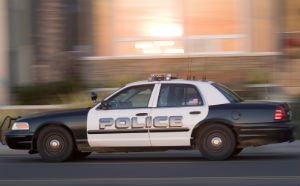
On March 10, a suspect accused of credit card fraud at a hotel led Mesquite police on a high-speed chase that ended only when the suspect crashed into a school bus full of elementary school children.
Table of Contents
Fortunately, no children were injured, but the incident sparked renewed dialogue about the dangers of police chases.
High-speed chases kill thousands of innocent people every year. According to the National Highway Transportation Safety Administration (NHTSA), at least 11,506 people, including fleeing suspects, died in police chases from 1979 to 2013. That is an average of 329 deaths a year, which is equal to nearly one person per day.
A USA Today analysis of police chase data shows that bystanders and passengers in chased cars make up almost half of all police pursuit deaths.
These numbers, however, likely understate the actual death toll because the NHTSA relies on police reports to determine if an accident was related to a chase and not all reports indicate if a chase occurred.
Furthermore, the actual number of innocent bystanders who are killed by police chases is impossible to pinpoint because the NHTSA’s records do not reveal if victims were in a vehicle that was hit during a chase or if they were in cars fleeing police.
What makes these shocking numbers even worse is that the majority of high-speed chases begin as a result of an attempted traffic stop for a minor infraction.
In 2005, there were 354 police chases in Dallas – almost one every day – resulting in the deaths of 21 officers and 21 civilians.
Following that deadly year, the Dallas police chief at the time changed the Dallas pursuit law to be one of the most restrictive in the United States, allowing officers to only pursue violent offenders. Officers with the Dallas Police Department at the time believed that vehicles in a high-speed chases were just as dangerous as a loaded gun.
Since the 2006 change, chase numbers in Dallas have decreased significantly, and only one person has been killed in pursuits since the change.
Unfortunately, most police departments still allow officers to make in-the-moment decisions about whether to chase or not based on the perceived dangers to civilians.
If you were injured or lost a loved one as a result of a high-speed chase, contact the auto accident lawyers in Dallas at Anderson, Cummings & Drawhorn, LLP to discuss your legal options. Our personal injury attorneys are here to help.
Call (817) 920-9000 or complete a Free Case Evaluation form.

This page has been written, edited, and reviewed by a team of legal writers following our comprehensive guidelines. This page was approved by attorney Seth Anderson, whose team has more than 50 years of combined legal experience in helping victims of personal injury seek justice.

After a Fort Worth oilfield accident, you may be able to sue the contractor, the operator, or another company. Still, liability depends on who controlled the work, who created the dangerous condition, and whose conduct caused your injury. At Anderson, Cummings & Drawhorn, we know how complex oilfield accidents can...
Read Article
Grocery store slip and fall accidents are more serious than people think because they can cause serious injuries that may seem negligible at first. A sudden fall onto a hard floor can damage your head, spine, hips, joints, and other parts of your body, even when the fall initially looks...
Read Article
Multi-vehicle highway accidents in Fort Worth can cause serious injuries such as traumatic brain injuries, broken bones, spinal injuries, internal injuries, and severe soft tissue damage. You can be struck more than once as vehicles collide, increasing the force placed on the body. These crashes can occur on major highways...
Read ArticleTell us about your accident and your injuries. An injury lawyer from our team will call and provide you with a free evaluation of your case. If we can help, and you are unable to travel, we will come to your home, office, or hospital. It’s easy – let’s get started.

Email us anytime and we will get back to you.

Our attorneys will come to your home, office or hospital at your convenience.

Our team is ready and waiting to help you today.