Message Us
 Call Us
 Who Pays for Damages Caused When Someone Else Crashes My Car?
By Anderson, Cummings & Drawhorn, LLP on December 12, 2019
By Anderson, Cummings & Drawhorn, LLP on December 12, 2019
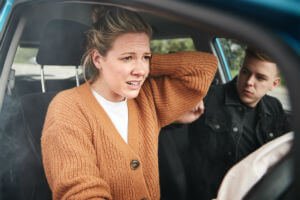
If you loaned your vehicle to a friend or family member and that person gets into an accident, you may be surprised to learn that you may be legally liable for the accident. What started as a favor for a loved one could create a complex legal problem.
Table of Contents
The knowledgeable car accident lawyers in Fort Worth from Anderson, Cummings & Drawhorn, LLP are available to help sort through this legal issue and explain your rights during a free consultation.
Your automotive insurance policy covers your vehicle, so if someone else is driving it and is responsible for an accident, it may cover the resulting damages. The insurance follows the car. If the driver causes damages that exceed your insurance limits, the driver’s own insurance policy may kick in and cover additional damages.
If the other driver is found to be at fault for the accident, the insurance policy that covers that vehicle may pay for the damages.
If you did not give permission for the third party to use your vehicle, your car insurance policy might not cover the damages that resulted from the accident. There are different types of permission you can provide:
Implied permission – Implied permission is based on your previous conduct when permission was granted. For example, you may place your car keys in a communal location where any adult in the unit could use the vehicle. While you did not expressly give permission, your previous conduct says it is fine for the person to borrow the vehicle.
Typically, the intended use of the vehicle is not relevant to a car accident claim. Whether your friend borrowed the car to go on a date or interview for a job, if he was found at fault for the accident, your car insurance would likely cover the damages.
However, if the person borrowing the vehicle is using it for a business, such as to deliver furniture or for their moving business, liability may shift to the driver. Drivers in these situations are required to purchase a separate insurance policy for commercial purposes, which should cover the resulting damages.
This legal term means you knew the driver was unsafe when you entrusted him or her with a dangerous item, such as a car.
Negligent entrustment may occur when you lend your vehicle to someone who:
As the owner of the vehicle, you are responsible for the upkeep on your vehicle to ensure that it is safe to operate. If you fail to keep your vehicle in safe working condition before another person borrows it, you can be held responsible for an accident that occurs as a result of your negligent maintenance.
Vehicle maintenance issues that could lead to an accident include:
Before lending your vehicle to anyone, be sure that your vehicle is in safe condition to help avoid these kinds of liability issues.
Sorting out liability after a car accident can be a complex issue. The car accident legal team at Anderson, Cummings & Drawhorn, LLP is prepared to identify the insurance policies that may apply to your claim. If your claim is viable, they may be able to seek compensation for your damages.
Call the legal team of Anderson, Cummings & Drawhorn, LLP today at (817) 920-9000 for a free consultation or you can fill out our Free Case Evaluation form.

This page has been written, edited, and reviewed by a team of legal writers following our comprehensive guidelines. This page was approved by attorney Seth Anderson, whose team has more than 50 years of combined legal experience in helping victims of personal injury seek justice.

Slip-and-Fall accidents in Fort Worth businesses are not only common but also often surprisingly serious. Fort Worth is growing rapidly in terms of both population and economic growth, and some businesses cut safety corners in their rush to keep up. If you’ve been injured in a slip-and-fall accident as a...
Read Article
There are a few industries that are more dangerous than oilfields, but some oilfield jobs are more dangerous than others. The Bartlett Shale is directly underneath Fort Worth and the surrounding area, and this translates to oilfield jobs. If you’ve been injured on the job while working in an oilfield,...
Read Article
No one needs to explain to you just how dangerous oil rig explosions are. These life-threatening accidents are not only exceptionally dangerous but are also challenging legal matters. If you or someone you care about was injured in an oil rig explosion, reach out to our experienced Fort Worth oil...
Read ArticleTell us about your accident and your injuries. An injury lawyer from our team will call and provide you with a free evaluation of your case. If we can help, and you are unable to travel, we will come to your home, office, or hospital. It’s easy – let’s get started.

Email us anytime and we will get back to you.

Our attorneys will come to your home, office or hospital at your convenience.

Our team is ready and waiting to help you today.