Message Us
 Call Us
 NHTSA and DOT Push for Crash Prevention Technology
By Anderson, Cummings & Drawhorn, LLP on August 19, 2014
By Anderson, Cummings & Drawhorn, LLP on August 19, 2014

Crash prevention technology is an ever-changing concept the entire transportation industry supports, but the National Highway Traffic Safety Administrations (NHTSA) latest efforts to keep motorists safe may be the biggest advancement yet.
Recently, the NHTSA and the U.S. Department of Transportation (USDOT) have teamed up to announce they will be supporting the development of vehicle-to-vehicle communication software for all new cars and trucks.
The idea behind vehicle-to-vehicle or V2V, communication is that motorists can rely on their cars to talk to other similarly equipped cars. In theory, V2V communication can alert drivers to impending collisions so they can be avoided.
The technology uses radio signals to monitor a vehicles position, heading, speed and more, and this information would be used to prevent collisions among vehicles equipped with the same technology. Through this chatter, drivers would be aware of a vehicle making a short stop several hundred yards ahead; additionally, traffic congestion may be improved as drivers have a bigger-picture view of what lies before them on crowded roads.
On Monday, Aug. 18, the government announced it will be taking the first concrete steps toward making V2V communication a requirement for all future cars. The NHTSA points to research that shows this new software could prevent as many as 592,000 left-turn and intersection collisions annually. This on its own may save upward of 1,000 lives every year.
Transportation Secretary Anthony Foxx called V2V technology the next great advancement in saving lives, although the effects of the new technology in the real world have yet to be seen.
Questions remain as to whether, like the self-driving car concept, drivers can rely completely on technology to keep them safe. While practical use of both a driver-less car and V2V communication has not yet been implemented, both are intriguing attempts to improve the safety of our nations roads and highways.
Have you or someone you love been injured in a car crash? Our experienced Fort Worth auto accident lawyers at Anderson, Cummings & Drawhorn, LLP are prepared to fight to get you results.
Request your FREE case review today. Call: (817) 920-9000.

This page has been written, edited, and reviewed by a team of legal writers following our comprehensive guidelines. This page was approved by attorney Seth Anderson, whose team has more than 50 years of combined legal experience in helping victims of personal injury seek justice.

After a Fort Worth oilfield accident, you may be able to sue the contractor, the operator, or another company. Still, liability depends on who controlled the work, who created the dangerous condition, and whose conduct caused your injury. At Anderson, Cummings & Drawhorn, we know how complex oilfield accidents can...
Read Article
Grocery store slip and fall accidents are more serious than people think because they can cause serious injuries that may seem negligible at first. A sudden fall onto a hard floor can damage your head, spine, hips, joints, and other parts of your body, even when the fall initially looks...
Read Article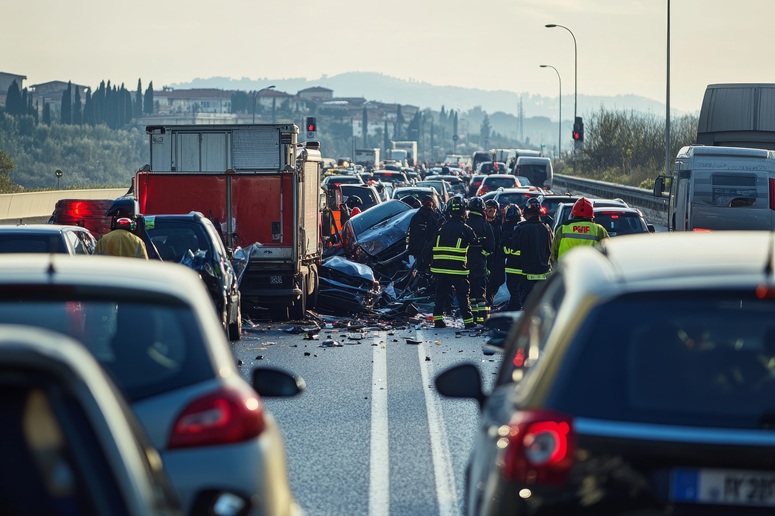
Multi-vehicle highway accidents in Fort Worth can cause serious injuries such as traumatic brain injuries, broken bones, spinal injuries, internal injuries, and severe soft tissue damage. You can be struck more than once as vehicles collide, increasing the force placed on the body. These crashes can occur on major highways...
Read ArticleTell us about your accident and your injuries. An injury lawyer from our team will call and provide you with a free evaluation of your case. If we can help, and you are unable to travel, we will come to your home, office, or hospital. It’s easy – let’s get started.

Email us anytime and we will get back to you.

Our attorneys will come to your home, office or hospital at your convenience.

Our team is ready and waiting to help you today.