Message Us
 Call Us
 Safety Tips for Motorcycle Riders
By Anderson, Cummings & Drawhorn, LLP on October 26, 2015
By Anderson, Cummings & Drawhorn, LLP on October 26, 2015
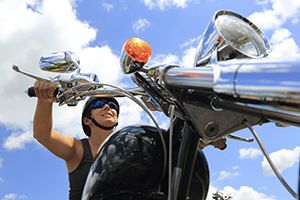
The risk of dying in a motorcycle crash is 30 times higher than in a car crash. Riding a motorcycle is inherently more dangerous than driving a car, as they lack many safety devices present in other vehicles. To make your riding experience safer, follow the motorcycle rider safety tips below.
Table of Contents
When purchasing a motorcycle, make sure to buy one that is the right fit for you. Your feet should touch the ground comfortably when on the bike, and the controls and handlebars should be well within your reach. Don’t choose a model that is too heavy or too powerful for your needs.
Motorcycles with anti-lock braking systems have a 37 percent lower chance of being involved in deadly accidents, compared to models lacking them. With an anti-lock braking system in place, you can keep control of steering in the event you need to make an emergency stop.
Taking a motorcycle safety course is highly recommended by Honda and other motorcycle manufacturers. You’ll learn basic skills as well as skills that will help you make emergency roadway maneuvers. As an added bonus, taking such a course may qualify you for insurance discounts and credit toward your state licensing tests.
While helmets are still optional in some places, the statistics don’t lie: without a helmet, your risk of dying from a crash-related fatal head injury rises 40 percent. Riders without helmets are also three times more likely to sustain injuries to the brain. The Department of Transportation recommends full-face helmets for motorcycle riders.
In addition to helmets, riders should wear protective clothing, such as leather and footwear that extends over the ankles. Protective eyewear should also be used.
If you or a loved one has been seriously hurt in a motorcycle accident, contact a motorcycle accident attorney in Fort Worth from the law offices of Anderson, Cummings & Drawhorn, LLP today for a free case evaluation.

This page has been written, edited, and reviewed by a team of legal writers following our comprehensive guidelines. This page was approved by attorney Seth Anderson, whose team has more than 50 years of combined legal experience in helping victims of personal injury seek justice.

Slip-and-Fall accidents in Fort Worth businesses are not only common but also often surprisingly serious. Fort Worth is growing rapidly in terms of both population and economic growth, and some businesses cut safety corners in their rush to keep up. If you’ve been injured in a slip-and-fall accident as a...
Read Article
There are a few industries that are more dangerous than oilfields, but some oilfield jobs are more dangerous than others. The Bartlett Shale is directly underneath Fort Worth and the surrounding area, and this translates to oilfield jobs. If you’ve been injured on the job while working in an oilfield,...
Read Article
No one needs to explain to you just how dangerous oil rig explosions are. These life-threatening accidents are not only exceptionally dangerous but are also challenging legal matters. If you or someone you care about was injured in an oil rig explosion, reach out to our experienced Fort Worth oil...
Read ArticleTell us about your accident and your injuries. An injury lawyer from our team will call and provide you with a free evaluation of your case. If we can help, and you are unable to travel, we will come to your home, office, or hospital. It’s easy – let’s get started.

Email us anytime and we will get back to you.

Our attorneys will come to your home, office or hospital at your convenience.

Our team is ready and waiting to help you today.