Message Us
 Call Us
 Study: Ignition Interlock Laws Can Reduce Drunk Driving Deaths
By Anderson, Cummings & Drawhorn, LLP on February 16, 2017
By Anderson, Cummings & Drawhorn, LLP on February 16, 2017
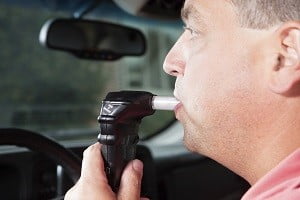
All-offender ignition interlock laws are associated with a seven percent reduction in fatal drunk driving accidents, according to research from the Johns Hopkins University Bloomberg School of Public Health.
These laws are in place in the District of Columbia and 28 states, including Texas. They require anyone convicted of driving under the influence to have an ignition interlock installed in their car.
These devices are breathalyzers connected to a vehicle’s ignition. Cars with ignition interlocks will not start until the driver breathes into the device so it can measure blood alcohol concentration (BAC). If the driver’s BAC is found to be above the legal limit, the device will prevent the car from starting.
The purpose of the Johns Hopkins study was to determine how ignition interlock laws and other traffic safety improvements affected the number of drunk driving crashes from the late 1980s to 2013. Researchers found that all-offender ignition interlock laws saved more than 1,200 lives.
The Johns Hopkins study is titled Ignition Interlock Laws: Effects on Fatal Motor Vehicle Crashes, 1982-2013. It is one of the first studies to prove that ignition interlock laws can help lower the number of drunk driving fatalities.
In March 2016, researchers from the University of Pennsylvania released a study revealing that these laws could reduce drunk driving deaths by as much as 15 percent.
The cost of installing an ignition interlock ranges from $70 to $150, while it costs $60 to $80 for ongoing monitoring.
More than 300,000 of these devices had been installed in cars nationwide, as of 2013.
If you lost a loved one in a crash caused by drunk driving, contact the Fort Worth auto accident lawyers at Anderson, Cummings & Drawhorn, LLP for a free, no obligation legal consultation. We may be able to help you pursue compensation through a Texas wrongful death lawsuit.
Our personal injury lawyers work on a contingency fee basis, which means there is no charge for our services unless there is a favorable resolution of your claim.
Call us today at (817) 920-9000 or complete a Free Case Evaluation form.

This page has been written, edited, and reviewed by a team of legal writers following our comprehensive guidelines. This page was approved by attorney Seth Anderson, whose team has more than 50 years of combined legal experience in helping victims of personal injury seek justice.

After a Fort Worth oilfield accident, you may be able to sue the contractor, the operator, or another company. Still, liability depends on who controlled the work, who created the dangerous condition, and whose conduct caused your injury. At Anderson, Cummings & Drawhorn, we know how complex oilfield accidents can...
Read Article
Grocery store slip and fall accidents are more serious than people think because they can cause serious injuries that may seem negligible at first. A sudden fall onto a hard floor can damage your head, spine, hips, joints, and other parts of your body, even when the fall initially looks...
Read Article
Multi-vehicle highway accidents in Fort Worth can cause serious injuries such as traumatic brain injuries, broken bones, spinal injuries, internal injuries, and severe soft tissue damage. You can be struck more than once as vehicles collide, increasing the force placed on the body. These crashes can occur on major highways...
Read ArticleTell us about your accident and your injuries. An injury lawyer from our team will call and provide you with a free evaluation of your case. If we can help, and you are unable to travel, we will come to your home, office, or hospital. It’s easy – let’s get started.

Email us anytime and we will get back to you.

Our attorneys will come to your home, office or hospital at your convenience.

Our team is ready and waiting to help you today.