Message Us
 Call Us
 Not all traffic laws are as straightforward as they seem. In fact, there are weird traffic laws in Texas—and across the country—that could actually influence the outcome of a car accident claim. At Anderson, Cummings & Drawhorn, LLP, we’ve seen firsthand how unusual laws can play a role in liability after a crash. In this post, we’ll explore some of the strangest rules on the books, how they might affect your case, and what to do if you’re injured by a driver who breaks one.
Table of Contents
Weird traffic laws in Texas

Texas drivers may be surprised to learn just how many weird traffic laws are still enforced across the state. Some are designed for safety, while others seem downright bizarre—but all carry potential legal consequences. If someone breaks one and causes a crash, they could be held responsible.
Here are some unusual examples across the state:
- Windshield Wipers : It’s illegal to drive without windshield wipers—even without a windshield.
- Parking Brakes : In Denton County, drivers must set the parking brake when leaving the vehicle.
- Alcohol Proximity : In Lubbock, you can be penalized for operating a vehicle within an arm’s length of alcohol, including in another person’s bloodstream, as outlined in Texas Penal Code Sec. 49.031.
- U-Turns : U-turns are banned in Richardson.
- Broadway Restrictions : In Galveston, you’re not allowed to drive on Broadway before noon on Sundays.
- Bumper Rules : Any item extending from your bumper must be secured with a chain.
- Horse Lighting : In Texarkana, horseback riders at night must use tail lights.
- Ignition Keys : You can’t leave your keys in the ignition while the car is unattended, as mandated by the Texas Transportation Code Sec. 545.404.
- Opening Doors : In San Antonio, you can’t open vehicle doors while moving, even when stopped.
These laws, while strange, are enforceable. If someone breaks one and causes a crash, it can affect who’s held responsible in a personal injury claim.
Unusual traffic laws by state
Weird traffic laws aren’t limited to Texas. Across the U.S., strange but enforceable rules can play a role in personal injury claims—especially when local codes are unfamiliar to out-of-state drivers.
Here’s a closer look at laws from other states:
- Alabama : Driving while blindfolded is illegal.
- Alaska : You can’t drive with a dog strapped to the roof.
- Arizona : Backing up on a public road is prohibited.
- Arkansas : No honking after 9 p.m. outside sandwich shops serving cold drinks.
- California : Women can’t drive in housecoats; leaping from moving cars over 65 mph is illegal.
- Colorado : In Denver, black cars are banned on Sundays.
- Delaware/New York : Changing clothes in a vehicle is prohibited.
- Georgia : Spitting from cars or buses is banned, but not from trucks.
- Idaho : In Idaho Falls, motorcycle riders over 88 can’t ride.
- Illinois : Driving without a steering wheel is illegal.
- Iowa : Tossing Red Ryder BB guns on highways is prohibited.
- Kansas : Transporting dead poultry is not allowed.
- Kentucky : In Fort Thomas, pets can’t molest vehicles.
- Massachusetts : Driving with a gorilla in the backseat is banned.
- Missouri : You can’t honk someone else’s horn.
- Montana : Leaving sheep unattended in trucks is illegal.
- Nevada : No camels on highways.
- Ohio : Circling the town square more than 100 times is illegal.
- Oklahoma : Reading comic books while driving is unlawful.
- South Carolina : Storing garbage in your car is illegal.
While most don’t affect Texans directly, they remind us that legal accountability can turn on surprisingly specific rules and local regulations that may not be widely known.
What to Do If You’re Hurt by a Driver Violating a Traffic Law
If you’ve been hurt in a crash and the other driver broke even a strange or obscure law, that violation could support your claim. You deserve protection under the law—and when another driver fails to follow it, they may be held liable for your injuries.
Steps to take:
- Report the incident to law enforcement.
- Get medical care and document injuries.
- Preserve any evidence suggesting a law violation.
- Don’t speak to insurers without legal advice.
- Contact our firm for experienced guidance in traffic violation claims.
We’ll examine the law in question and fight to recover the full and fair compensation you deserve for your injuries, damages, and ongoing personal or financial losses.
Contact a Fort Worth Car Accident Lawyer Today
At Anderson, Cummings & Drawhorn, LLP, we understand how even the most unexpected traffic law violations can lead to serious accidents. If you’ve been injured and think a strange law played a role, let us review your case. Call 817-920-9000 or contact us online for a free consultation. There are no upfront costs, and we only get paid if you do.

This page has been written, edited, and reviewed by a team of legal writers following our comprehensive guidelines. This page was approved by attorney Seth Anderson, whose team has more than 50 years of combined legal experience in helping victims of personal injury seek justice.
Recent Blog Posts

Oilfield Contractors vs. Operators: Who Can Be Sued After an Accident?
After a Fort Worth oilfield accident, you may be able to sue the contractor, the operator, or another company. Still, liability depends on who controlled the work, who created the dangerous condition, and whose conduct caused your injury. At Anderson, Cummings & Drawhorn, we know how complex oilfield accidents can...
Read Article
Why Grocery Store Slip and Fall Accidents Are More Serious Than People Think
Grocery store slip and fall accidents are more serious than people think because they can cause serious injuries that may seem negligible at first. A sudden fall onto a hard floor can damage your head, spine, hips, joints, and other parts of your body, even when the fall initially looks...
Read Article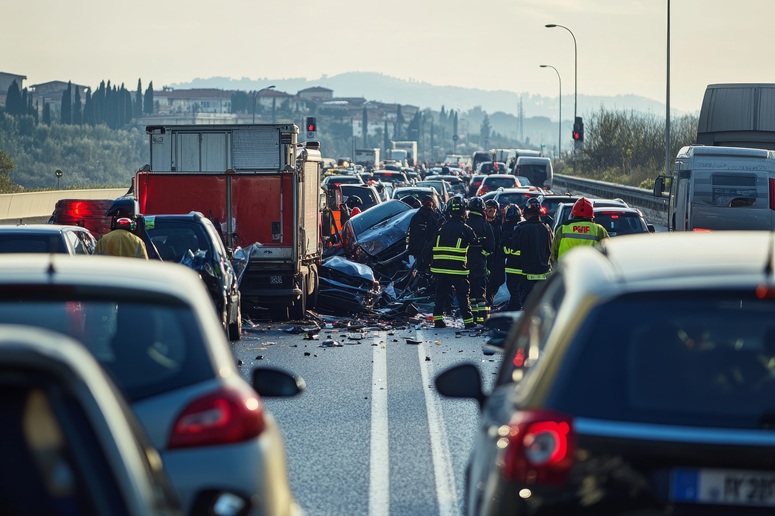
Common Injuries from Multi-Vehicle Accidents on Highways
Multi-vehicle highway accidents in Fort Worth can cause serious injuries such as traumatic brain injuries, broken bones, spinal injuries, internal injuries, and severe soft tissue damage. You can be struck more than once as vehicles collide, increasing the force placed on the body. These crashes can occur on major highways...
Read ArticleRequest a Free Case Evaluation
Tell us about your accident and your injuries. An injury lawyer from our team will call and provide you with a free evaluation of your case. If we can help, and you are unable to travel, we will come to your home, office, or hospital. It’s easy – let’s get started.


Email Us Anytime
Email us anytime and we will get back to you.

We’ll Come To You
Our attorneys will come to your home, office or hospital at your convenience.

Available 24/7
Our team is ready and waiting to help you today.