Message Us
 Call Us
 Using Vehicle Damage To Prove Fault for a Fort Worth Crash
By Anderson, Cummings & Drawhorn, LLP on March 21, 2024
By Anderson, Cummings & Drawhorn, LLP on March 21, 2024
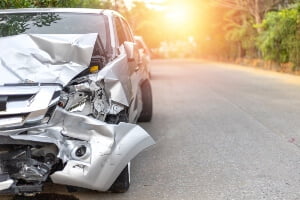
When examining a crash scene, investigators look at a lot of evidence, especially if the cause of the accident is not immediately clear. Vehicle damage is one of the factors that can provide insight into what happened, including the type of crash and who may have caused it.
Table of Contents
At Anderson, Cummings & Drawhorn, LLP we take a closer look at how vehicle damage can help to clarify fault for a crash, including the key areas of a vehicle to examine and what story the damage may tell.
If you or a loved one suffered harm in a crash because of another driver’s negligence, we encourage you to seek legal help. Our experienced auto accident lawyers in Fort Worth manage injury claims for crash victims every day. We know what evidence is needed, the deadlines that apply and how to get results.
Find out if you may have a valid case to recover compensation. Your initial consultation is free and there are no upfront costs to hire our services.
Learn more about our services. Request a FREE case review today. (817) 920-9000
Vehicle damage plays a crucial role in establishing liability for a car crash. The location and extent of damage on the vehicles involved provide evidence of how the collision occurred. For instance, damage to the rear of one car and the front of another could indicate a rear-end collision, typically placing the blame on the trailing driver who hit the car in front. Additionally, forensic experts can analyze damage patterns to reconstruct the accident, helping to determine factors such as speed, direction and impact angles. These factors are all vital in helping to piece together the sequence of events leading up to a crash.
In Texas, where comparative negligence laws apply, the details of the vehicle damage can be instrumental in determining the degree of fault shared by the parties involved. This analysis can significantly affect the compensation each party may be eligible to receive. By examining vehicle damage, along with other evidence, we can build a robust case to accurately establish liability.
After the crash, investigators will examine all the vehicles involved, including the full exterior: front, back and sides of a vehicle. However, the wheelbase, braking system, tires and even under the hood should also be examined. This is especially true in cases where fault is not clear, such as a “he said, she said” situation. Video, photos and diagrams of vehicle damage may provide insight into the cause of the crash.
Crash damage to the rear-end of a vehicle and the front of another vehicle indicates a rear-end crash. The assumption is that the driver in back is always at fault, as drivers have a duty to maintain control of their vehicles. While that is often the case, there may be more to the story. Maybe the driver in front slammed on the brakes because the driver in back was following too closely.
The location of vehicle damage often indicates what type of crash occurred. Here are a couple of examples of how vehicle damage can tell you the type of crash that occurred.
If two vehicles involved in the crash have frontal damage, that damage indicates a head-on collision. However, the damage alone is often not enough to clarify who caused the crash. Crash scene investigators would need to know more, such as whether one of the drivers was headed the wrong way and why. One example of how this could happen is if one vehicle slid on a puddle of water or patch of ice and lost control, spinning around in the other direction.
When there is rear-end damage on one vehicle and frontal damage on the trailing vehicle, you can assume a rear-end collision. However, you cannot assume fault. Many people believe that fault is straightforward in that situation, but even then you may not necessarily know who caused the crash. There are other factors that need to be determined. The way the crash occurred raises some additional questions about events leading up to the accident:
As you can see, vehicle damage provides a certain amount of insight, but it still only tells part of the story.
The location of vehicle damage tells part of the story, but the extent of that damage gives us even more information. The greater the amount of damage, the faster one or both vehicles were traveling. An example of this is the amount of damage caused by a fender bender during a traffic jam where no one is going above five to 10 miles per hour. There is likely to be very little, if any, damage. If, however, one vehicle is stopped at a traffic light and a distracted driver hits that stopped vehicle at 35 miles per hour or greater, the damage will be significant. The vehicle occupants could suffer serious injuries in a higher speed rear-end crash.
The vehicle with the most damage is not necessarily the at fault party. Take, for example, a T-Bone crash. The vehicle that has the most damage in this situation may be the victim hit by another driver who failed to yield the right of way in an intersection.
Vehicle damage is only one type of evidence. It is vital, but often it has more meaning when combined with other crash scene evidence. In a rear-end crash, investigators might look to see if there are any fresh skid marks. These marks are an indication the driver in back tried to stop to avoid a crash. An absence of skid marks may show that the driver who rear-ended the other vehicle was not paying attention.
As a crash victim, you may be able to provide some additional evidence before you leave the site. However, your health is your priority, so do not put yourself or others in harm’s way. If you can do so safely, try to capture this additional evidence:
In addition to documenting the damage, we also recommend seeking legal advice.
You do not need to try to navigate the complexities of proving fault on your own. Having an attorney fight for your legal rights and best interests allows you to focus on your health and healing.
At Anderson, Cummings & Drawhorn, LLP, we have spent decades helping injured victims in Fort Worth and throughout Texas. Our attorneys have extensive experience and are deeply committed to recovering the maximum possible compensation on your behalf.
Call to discuss your situation with one of our knowledgeable attorneys. There are no upfront fees to pay to hire our services. We are here to help you.
Anderson, Cummings & Drawhorn, LLP. Proven Results. Millions Recovered. (817) 920-9000

This page has been written, edited, and reviewed by a team of legal writers following our comprehensive guidelines. This page was approved by attorney Seth Anderson, whose team has more than 50 years of combined legal experience in helping victims of personal injury seek justice.

Slip-and-Fall accidents in Fort Worth businesses are not only common but also often surprisingly serious. Fort Worth is growing rapidly in terms of both population and economic growth, and some businesses cut safety corners in their rush to keep up. If you’ve been injured in a slip-and-fall accident as a...
Read Article
There are a few industries that are more dangerous than oilfields, but some oilfield jobs are more dangerous than others. The Bartlett Shale is directly underneath Fort Worth and the surrounding area, and this translates to oilfield jobs. If you’ve been injured on the job while working in an oilfield,...
Read Article
No one needs to explain to you just how dangerous oil rig explosions are. These life-threatening accidents are not only exceptionally dangerous but are also challenging legal matters. If you or someone you care about was injured in an oil rig explosion, reach out to our experienced Fort Worth oil...
Read ArticleTell us about your accident and your injuries. An injury lawyer from our team will call and provide you with a free evaluation of your case. If we can help, and you are unable to travel, we will come to your home, office, or hospital. It’s easy – let’s get started.

Email us anytime and we will get back to you.

Our attorneys will come to your home, office or hospital at your convenience.

Our team is ready and waiting to help you today.