Message Us
 Call Us
 Wheelchair-Bound Pedestrians at Higher Risk of Traffic Deaths
By Anderson, Cummings & Drawhorn, LLP on November 23, 2015
By Anderson, Cummings & Drawhorn, LLP on November 23, 2015
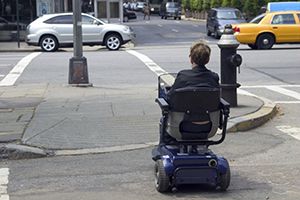
The risk of being in a fatal pedestrian traffic accident is one-third higher for wheelchair users than the rest of the population. Approximately 528 wheelchair users were killed in pedestrian traffic accidents between 2006 and 2012 in the United States.
By evaluating crash data from the National Highway Traffic Safety Administration, disturbing trends were uncovered by Georgetown University researchers. They determined that wheelchair users are more likely to be killed in pedestrian traffic accidents. Their risk of death is six percent higher than the general population. Wheelchair-bound men are approximately five times more likely to be killed in a pedestrian crash than women in wheelchairs.
For the purpose of this study, only risk was analyzed, not the reason why wheelchair-bound pedestrians are more likely to be killed in traffic accidents. Despite the study’s focus, there are some clues as to why these accidents may occur:
If you have lost a wheelchair-bound loved one in a pedestrian traffic accident, the auto accident lawyers in Fort Worth at Anderson, Cummings & Drawhorn, LLP is here to help. An injury attorney from our firm will aggressively pursue compensation for your loss.
Contact us at (817) 920-9000 for a free consultation.

This page has been written, edited, and reviewed by a team of legal writers following our comprehensive guidelines. This page was approved by attorney Seth Anderson, whose team has more than 50 years of combined legal experience in helping victims of personal injury seek justice.

After a Fort Worth oilfield accident, you may be able to sue the contractor, the operator, or another company. Still, liability depends on who controlled the work, who created the dangerous condition, and whose conduct caused your injury. At Anderson, Cummings & Drawhorn, we know how complex oilfield accidents can...
Read Article
Grocery store slip and fall accidents are more serious than people think because they can cause serious injuries that may seem negligible at first. A sudden fall onto a hard floor can damage your head, spine, hips, joints, and other parts of your body, even when the fall initially looks...
Read Article
Multi-vehicle highway accidents in Fort Worth can cause serious injuries such as traumatic brain injuries, broken bones, spinal injuries, internal injuries, and severe soft tissue damage. You can be struck more than once as vehicles collide, increasing the force placed on the body. These crashes can occur on major highways...
Read ArticleTell us about your accident and your injuries. An injury lawyer from our team will call and provide you with a free evaluation of your case. If we can help, and you are unable to travel, we will come to your home, office, or hospital. It’s easy – let’s get started.

Email us anytime and we will get back to you.

Our attorneys will come to your home, office or hospital at your convenience.

Our team is ready and waiting to help you today.