Message Us
 Call Us
 Why Liability Can Be Confusing in a Multi-Vehicle Accident
By Anderson, Cummings & Drawhorn, LLP on July 18, 2019
By Anderson, Cummings & Drawhorn, LLP on July 18, 2019

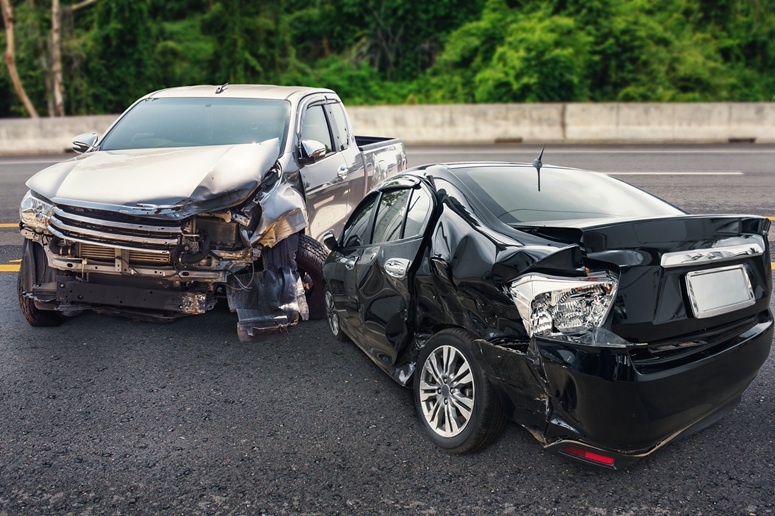
If you were involved in an accident with multiple vehicles, it may be difficult to determine who caused the accident. Below, we put together some important information you should know about these types of accidents and how fault is determined by insurance companies and juries.
Table of Contents
If you still have questions, do not hesitate to contact the experienced Fort Worth car accident lawyers at Anderson, Cummings & Drawhorn, LLP for further assistance. We can investigate your situation, determine liability and pursue compensation for your claim.
Multi-vehicle accidents involve multiple vehicles that collide with each other and may have multiple points of impact. They may cause catastrophic injuries and fatalities. Common causes of multi-vehicle accidents include:
Determining fault is the most complicated aspect of these types of cases because the actions of multiple drivers may be in question. There may be a person who initially caused the accident by either tailgating, speeding or distracted driving. The insurance companies involved in the case will conduct a thorough investigation and assign fault to each negligent driver. If the case cannot be resolved through settlement, a trial may ensue, in which case the jury would have to weigh all the evidence to determine how much fault each party bears for the crash.
If the victim of a car accident acts in a negligent way and contributes to the accident, Texas’ modified comparative fault rule applies. Under this rule, if the victim is 51 percent or more at fault for the accident, he or she cannot sue the other parties who contributed to the accident. However, if his or her degree of fault is calculated at less than 51 percent, he or she can pursue a lawsuit against the other negligent parties.
Under the comparative fault structure, the accident victim’s recovery is reduced by his or her percentage of fault. For example, if the victim is found to be 20 percent at fault and suffered damages of $100,000, the maximum that he or she could receive would be $80,000.
At Anderson, Cummings & Drawhorn, LLP, our experienced Fort Worth car accident lawyers are highly experienced and handle all types of car accident cases, including multi-vehicle accidents. Our skilled lawyers can conduct a thorough investigation and determine who should be held accountable for the damages that you have sustained. We do not charge for our services unless you win favorable compensation.
Contact us today to set up your free consultation.

This page has been written, edited, and reviewed by a team of legal writers following our comprehensive guidelines. This page was approved by attorney Seth Anderson, whose team has more than 50 years of combined legal experience in helping victims of personal injury seek justice.
If you are involved in a car accident in North Texas, move to a safe location, check for injuries, call 911 when appropriate, exchange information, document the crash, seek medical care, notify your insurer, and consider reaching out to Anderson, Cummings & Drawhorn before accepting a settlement. The steps you...
Read Article
Slip-and-Fall accidents in Fort Worth businesses are not only common but also often surprisingly serious. Fort Worth is growing rapidly in terms of both population and economic growth, and some businesses cut safety corners in their rush to keep up. If you’ve been injured in a slip-and-fall accident as a...
Read Article
There are few industries that are more dangerous than oilfields, but some oilfield jobs are more dangerous than others. The Barnett Shale is directly underneath Fort Worth and the surrounding area, and this translates to oilfield jobs. If you’ve been injured on the job while working in an oilfield, you...
Read ArticleTell us about your accident and your injuries. An injury lawyer from our team will call and provide you with a free evaluation of your case. If we can help, and you are unable to travel, we will come to your home, office, or hospital. It’s easy – let’s get started.

Email us anytime and we will get back to you.

Our attorneys will come to your home, office or hospital at your convenience.

Our team is ready and waiting to help you today.